Using today's AI tools, I orchestrated and built a learning app for my two boys, starting in September 2025.
(It works, it's published, and I paused it in July.)
Here's what I built in Lovable. Three features sit at the core:
■ 1. Adaptive Learning Plan. Each week's lesson builds on how the last one went.
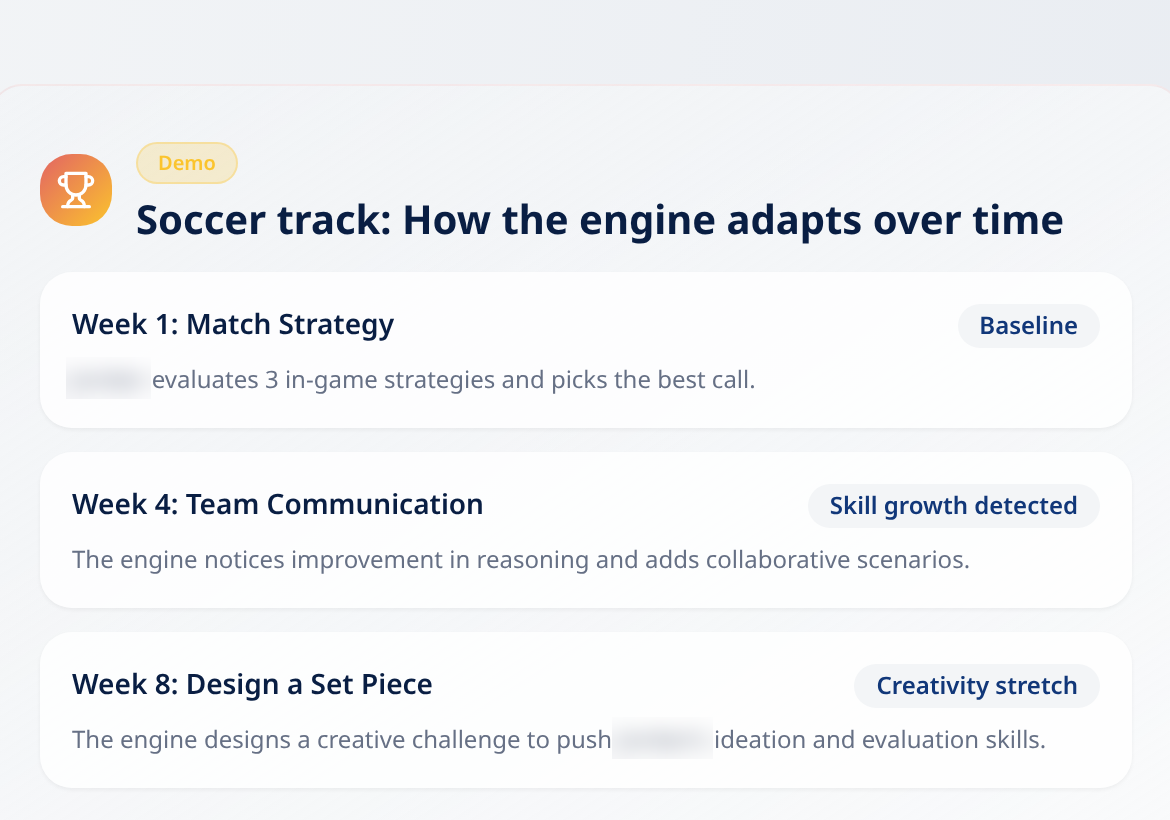
Demo view: the plan moves from a baseline to new skill targets week by week.
■ 2. Interest-based training. Lessons are built around something the kid already loves, like soccer.
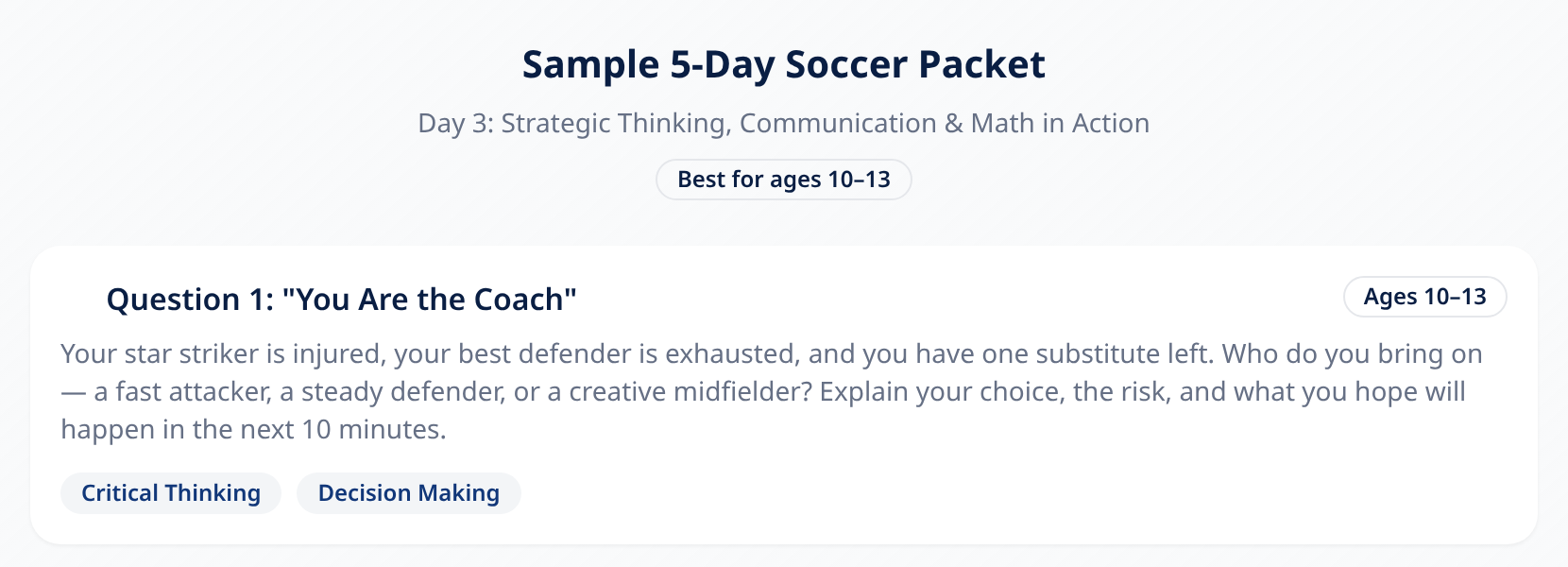
A sample soccer lesson that practices critical thinking and decision making.
■ 3. Scorecard. A before and after score for each thinking skill.
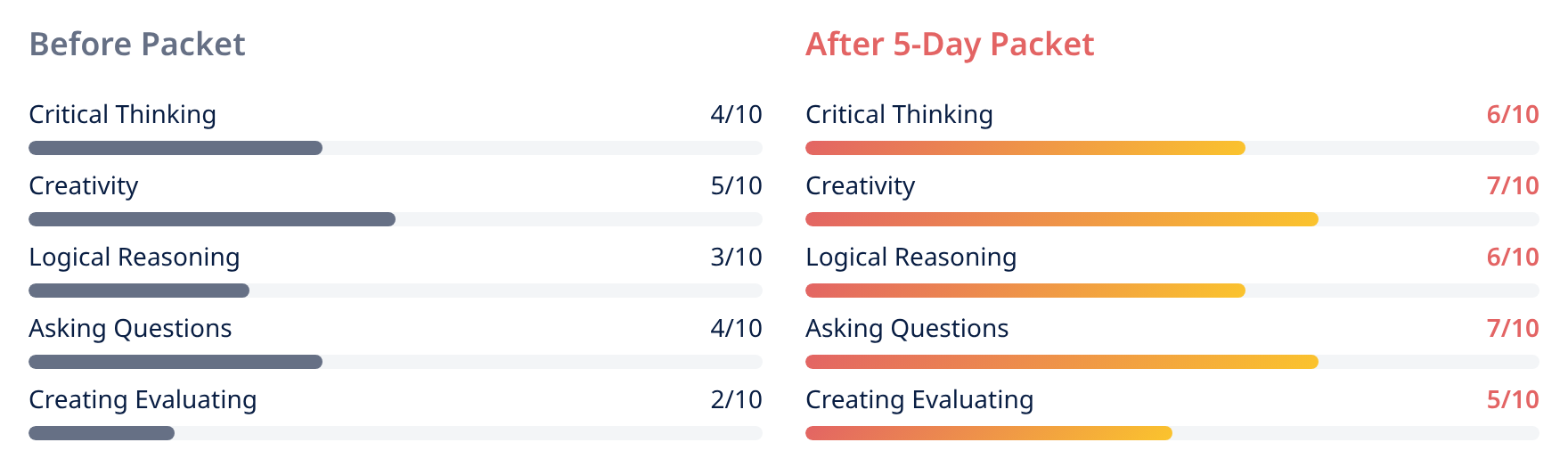
Demo scorecard: skills scored before and after a 5-day lesson set.
It also has a parent-facing AI learning coach, a kid-facing AI tutor, character chat with historical figures, and rewards the boys can redeem for gift cards. You can see it at mindrocket.online.
What building it taught me about AI adoption:
- The longest part was the human part: learning what my kids are really interested in, then testing the learning materials with them.
- AI got the difficulty wrong at first. Over time, it learns what each kid is good at and where they need help.
- I paused it because making it production-ready takes real time, and promoting it costs real money.
I take the same approach with owner-run firms. Start with a real problem for real people, build something small, and test it with the people who will use it.
What would you build if you didn't need a developer?